-
 México
México





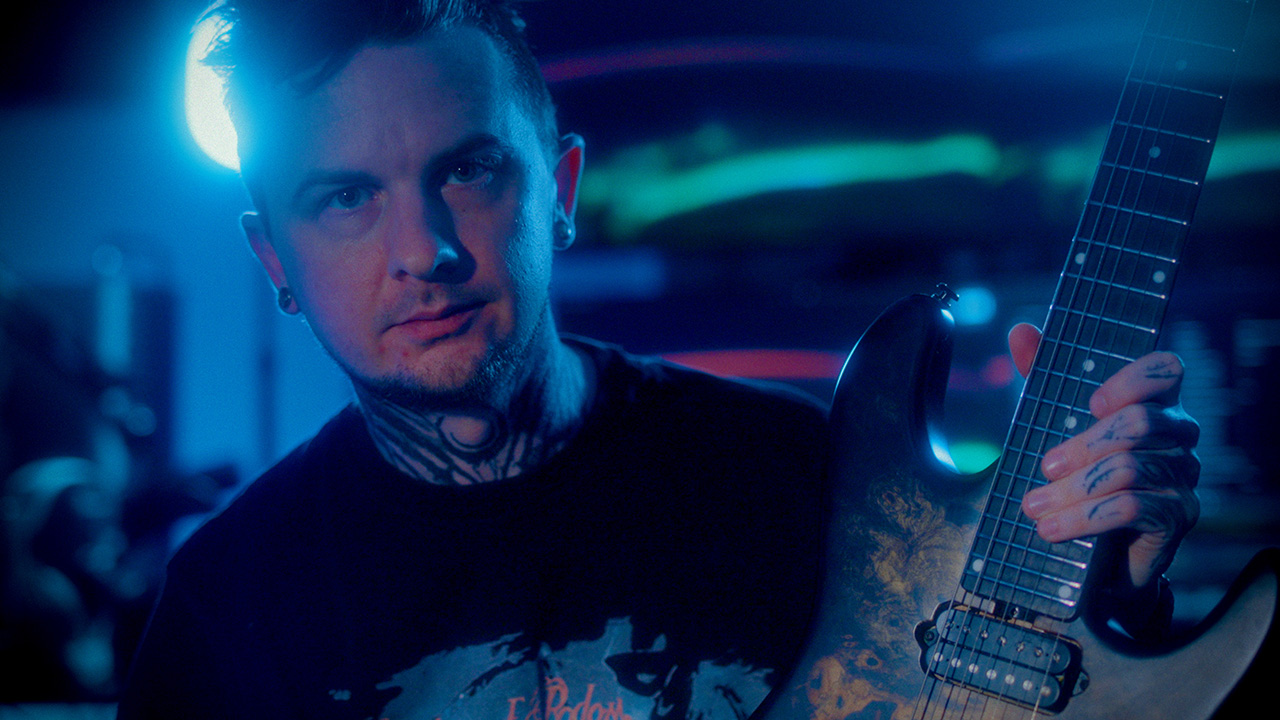
Guitar playing to me was when I first started to really get to know myself in life. That sounds really weird and emo, but yeah, gosh, I started playing when I was 12 years old. It was my first doorway to having a social life, to have any kind of confidence in myself, to feeling like I belong to something. So in a way, it was almost therapy at a time when I didn't really realize that I needed it. Whatever sort of emotion I'm feeling or whatever stage in life I'm at, I can always go back to it, and it's the ultimate centering tool.
Doing this for a living, it's a very transient life. Having that sort of home-based connection to something where I could be a million miles from home, we can be in Southeast Asia or whatever, or we can be in the States or be in Europe or going through a move or something chaotic in life, or gosh, even something terrible in life, grieving someone's death or getting over a breakup or whatever. The ability to have that one thing you can always go back to and feel any semblance of stability and feel like I belong here. And gosh, in 30-something years since I started, it hasn't really changed.
I remember I got a total of three or four guitar lessons in my life in 1995, and my guitar teacher told me, he's like, "Never do this." And I was like, "But it feels so good." And he was like, "Don't do that." I was like... And then I got a Guitar World magazine, and I saw Jimi Hendrix playing the Purple Haze Chords with his thumb. And I was like, "You motherfucker. I'm going to do that." And I just started playing with my thumb, and I never got lessons after that. And then I discovered Drop D tuning from Alice in Chains in the mid '90s, and I realized you could just... This was a power chord, right. Laying your finger down on the low strings was a power chord.
I could just lay my thumb down, and that'll be the power chord. I wasn't smart enough to realize that I could use the rest of my fingers to voice the rest of a chord. But when I realized that, that's when things truly opened up. So I discovered rock music in the early '90s when Nevermind came out by Nirvana, and then I got into sort of heavier types of music progressively. And I remember I had a buddy in high school who showed me Master Puppets, and I didn't know you were allowed to do those things on guitar. I didn't know you were allowed to have that much distortion on guitar, that you were able to downpick that fast and have that power and charisma in your playing.
My main sort of musical idol in the very beginning was James Hetfield. I became obsessed with learning all of those early Metallica Riffs, so much so to where I would strap a guitar on in my bedroom and wear it low like Hetfield, and I would just stand like James Hetfield, pretend I had a mic in front of my face, and I would learn every record front to back, and that's how I would rehearse the records. Even though I was not in a band, I was just a fan. Even now, when I see Metallica, that spark is sort of ignited in me all over again.
But yeah, Hetfield, I fell in love with Randy Rhoades, Dimebag Darrell. One of the bigger catalysts, sort of later into my love for rock and heavy music, came when I discovered bands like Meshuggah and bands like Opeth, bands that sort of took that Prague mentality, like that sort of Dream Theater approach to Prague and blended it with extreme metal. But when those worlds came together, the Prague and the really heavy extreme stuff, that's when I fell head over heels in love with this style of music.
I feel like where every metal head of my generation starts with Metallica and Megadeth and stuff like that, and it just got more silly and out of hand and borderline unhealthy. The part of the process that, I think, means the most to me is the creative side and the writing room. And gosh, even before the studio, sometimes just being alone and writing and seeing what comes out of nothing. There's just a lot of magic that comes out of it, especially when you work in a sort of democratic melting-pot environment such as Periphery.
When they brought me into the folds in 2010, 2011, I realized that it was fairly rare to be brought into a band and it'd be asked to contribute creatively off the jump. And that was something that I couldn't take for granted, and I still don't take it for granted. Periphery II was the first record I worked on in earnest with the band, and the first thing that I ever contributed to the band was on Periphery II, was a song Scarlet, and some other songs. And I remember hearing my own creative voice juxtaposed with Misha's voice and Jake's voice and Spencer and Matt.
And I remember just like getting chills because I was a fan of the Misha demos back in like the mid-2000s, late 2000s. I was a fan of Periphery I. So to hear the things that I brought to the table mixed with that, it was intoxicating if I'm honest. And that's when it was like, "Okay, I want to do this until I'm about 75 years old. I want to do this for life and see where we can take this." And now to see where it's evolved in a decade and a half to where we are one sort of melded creative voice, that's the dream to know what Misha's thinking, to know what Jake's thinking, Spencer and Matt.
For us all to sort of share a creative brain, so to speak, is fulfilling and explosive and fun. It's just constant reminder of the magic of creativity and teamwork. That's a very reading rainbow kind of lesson at the end of the day. But yeah. My journey with tone started in the very beginning. It's just how much gain can I get away with? You find out pretty early that that doesn't really work so well. Over the years, it's become this thing where I want to try and get away with sounding as heavy as possible and sounding as aggressive as possible with as little gain as I can get away with.
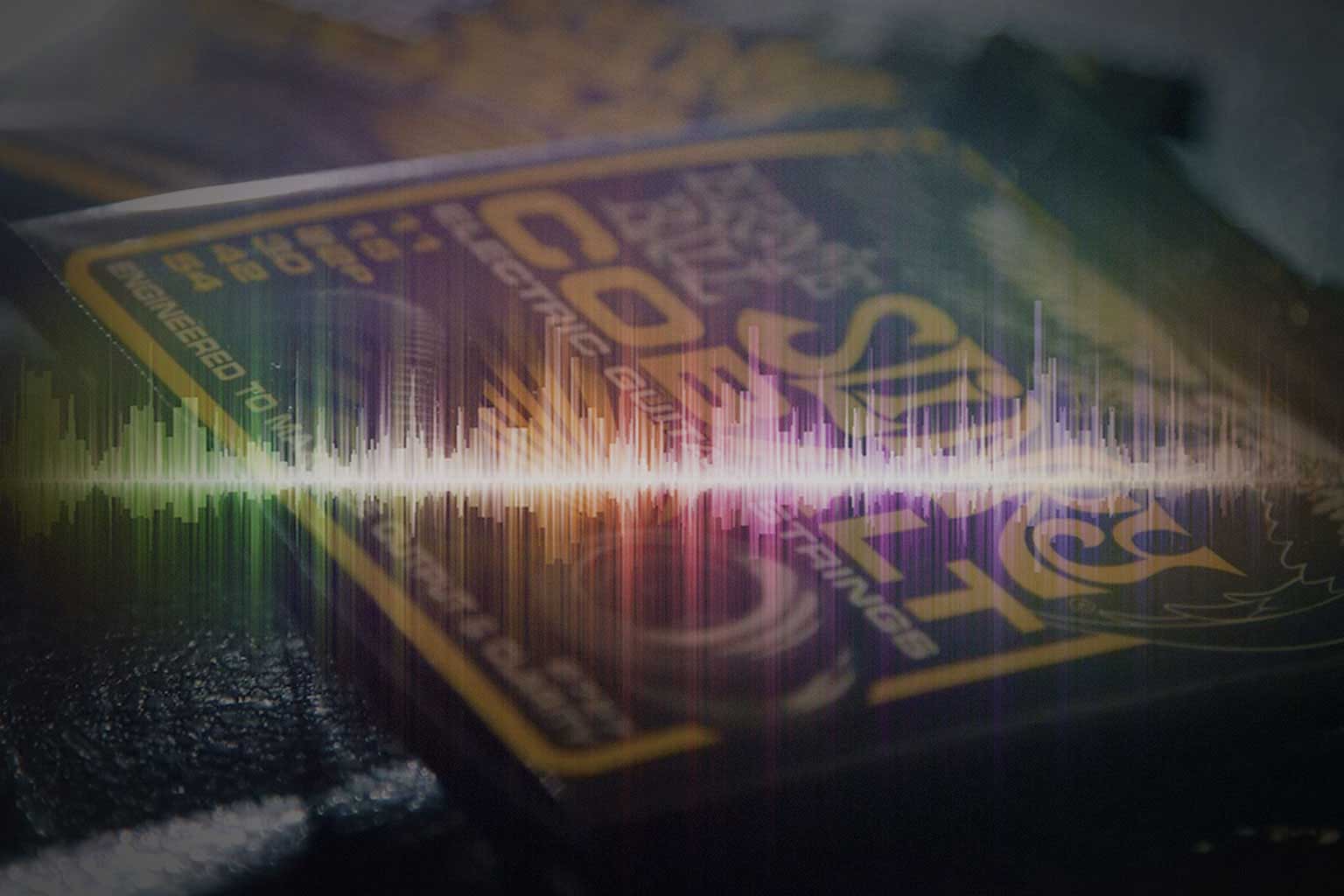
If you don't have it right string-wise, you are not going to get that tone basically, and there's numerous ways to go about getting it, but you can pretty much guarantee you're not getting there if the string side is kind of ignored. A number of years ago, I connected with some people over at Ernie Ball 2010, maybe even 2009, and they let me play some of the guitars, and I fell in love, and I remember liking the way the strings felt on the guitar. So it's always the first thing that I noticed when I pick up a guitar, and I've always been a fan of really light strings, strings that feel very effortless to play.
It sort of goes in line with this quest that I feel like I've been on since I started playing in Periphery, string gauges and scale length and pickups and all of the sort of inner dorkery as I call it of the specs, it's very much in line with the culture of Periphery, meaning that to play this music where you get away with these ludicrous tunings, where you're playing extended rage instruments and you're doing it with a high level of distortion, making three guitars work in a mix and playing these really kind of notey acrobatic songs on guitar, strings are sort of at the core of all of that.
And if the gauges aren't right, if the feel isn't right, the music kind of just doesn't work. Try and play any of our songs on a string gauge that's too light or too heavy, and you realize that you're losing a lot. It's always been this sort of fence-sitting, sort of trying to thread the needle with finding, at least for me personally, finding the lightest gauge possible that works in a given tune. And I reached out to Ernie Ball. I was like, "Hey, can you guys do some really weird funky gauges for me?"
And something that kind of like lives outside of the normal stock string gauges and have it have that Ernie Ball sound, but let's get playful, let's get creative and get weird with the gauges so I can finally feel like I have a set that there's truly no compromises from the way that the high E and the high B strings feel when I bend them or how the low six or low seven feels when I bend it up with doing a pinch harmonic or something, or how it feels when I tune it down all the way to drop G or when I tune to an open tuning and I have to tune my second and third strings to a completely new open tuning.
So I'm very grateful to Ernie Ball for being willing to have that conversation and just be open to weird ideas and doing something unique and working with me there. So yeah, I love how sort of open and progressive they've been to this whole discussion. Yeah, it's been really fun. For Periphery, the intent is always expression, and that's why any given Periphery song could have a million notes in it.
It can be technical, it can be eight-string song, 15 minutes long. Then you hear another Periphery song that is just droning on the open seventh string, just sort of embracing the power of a low, heavy-picked power chord. And for me, that's kind of the punk rock approach is pure expression. And I can tell you there's never been a Periphery song where we feel like we have to say more with more notes. If we're saying enough with as few notes as possible, that's the aim. That's the goal. It's never been about cramming as many notes or showing people how fast we can play or how much we can get away with.
Maybe in the early days, there was a tiny bit of that, but if the song is able to evoke an emotion, that's always paramount. That's the thing we're always chasing in our music. My approach with writing is always to do it out of impulse and to do it regularly. Even if I'm not inspired, I always try and keep writing music a daily thing. It's the riff graveyard, and it's a Dropbox folder within the band or even just a personal folder on my own laptop at home where ideas just sit there. This happened actually two weeks ago. I was at home, and I started writing this idea, and I don't know where it's going to go.
It's like 90 seconds of music, but it's going to sit there, and I'm going to work on it whenever I feel like. And if it doesn't become anything, it doesn't become anything, but it's always going to exist if I want to revisit it in a month or six months or a year or five years, which has happened sometimes with Periphery. We'll go back, and we'll find an idea, be like, "Whoa, why did we never work on this?" Or, "Wow, we kind of thought this sucked five years ago, but now it's kind of sick, and we should do something with it."
It's a phenomenon that happens way more often than you'd think. So always create, and that's my own personal philosophy. It's a shared philosophy we have within the band, and it's a pastime that we never abandon, even if we just finished a record. If I'm feeling stuck or if I'm feeling kind of sedentary or just whatever, cobwebs, creatively, I'll throw my guitar [inaudible 00:14:00] open tuning or I'll pick up an eight string, a guitar that feels a little alien, or maybe I'll throw my eight string in a weird tuning just to see what I'm capable of coming up with and putting myself outside of my comfort zone.
And that's really why I find myself playing in so many tunings and playing so many types of different guitars. When we pick up an eight, it's not just because we want to write a heavy song in a low tuning. It's just to get a different flavor. Ideally, a record to me should kind of be a journey in every way, but to have songs starting in different keys to weave in and out of different keys, it's kind of this sort of bonus side effect of that approach, is no two songs ever end up sounding the same.
It's kind of this approach that has many different types of benefits ultimately. I always say to people, if I wasn't playing professionally in Periphery, if I didn't have my own guitars, if I wasn't where I am in life, I would always be pining to be in this position. So I'm very grateful things have sort of played out the way that they have because this is the only thing in life that I've ever truly loved is guitar playing in the whole world.